


























CINCINNATI — Tee Higgins has spent much of his NFL career playing alongside one of football's most celebrated receivers, but his performance this season is making something increasingly clear. The Cincinnati Bengals don't simply have one elite wide receiver and a talented second option. They have two receivers capable of playing among the five best in the league.
Through seven games, Higgins has caught 43 passes for 726 yards and four touchdowns. He ranks second in the NFL in receiving yards, trailing only Seattle's Jaxon Smith-Njigba, and is averaging 103.7 yards per game.
For perspective, Higgins finished the entire 2025 season with 846 receiving yards on 59 catches in 15 games. He is just 120 yards away from matching that total despite playing eight fewer games, and his average of 16.9 yards per reception is up from 14.3 last season.
The improvement goes beyond the yardage. Higgins is catching 70.5% of the passes thrown his way, compared with 60.2% last year, while averaging nearly twice as many receiving yards per game. His increased production reflects a receiver who is making more of his opportunities and becoming an even bigger part of Cincinnati's offense.
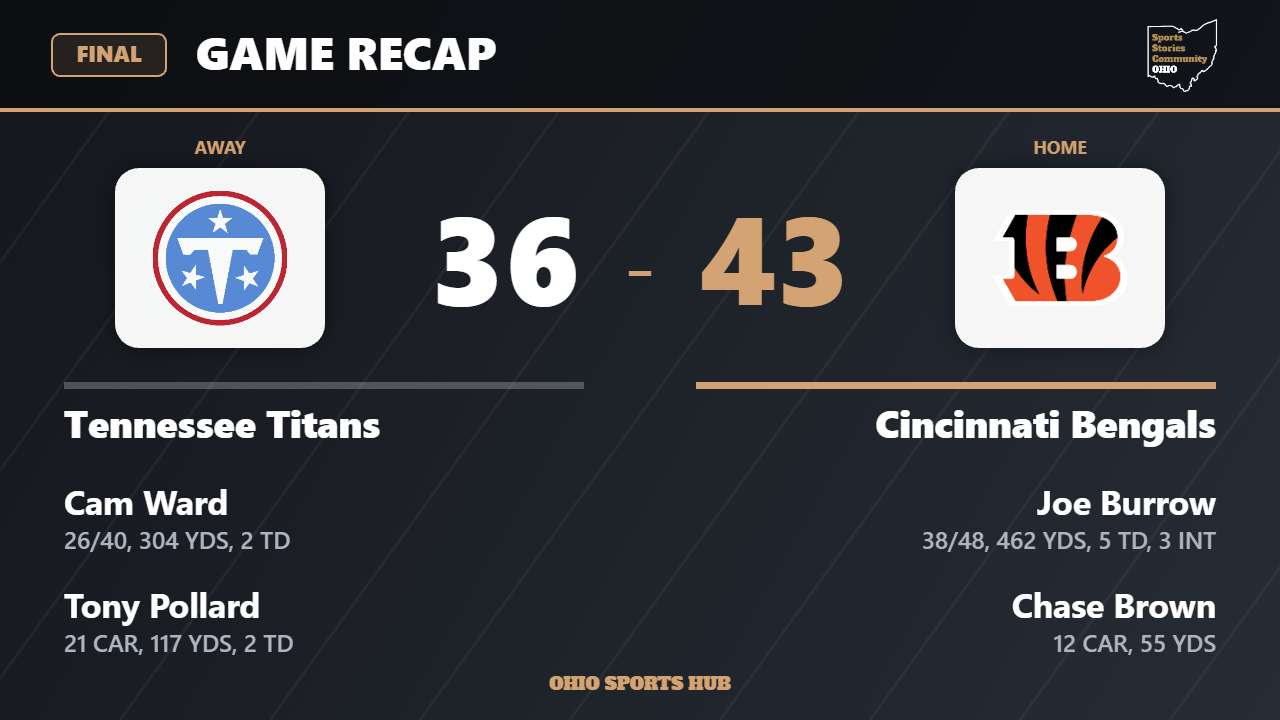
His last two performances have been clutch. Higgins caught six passes for 148 yards and a touchdown against Baltimore on October 25, then followed with 10 receptions for 155 yards and two touchdowns in Sunday's 43-36 overtime victory against Tennessee.
Those performances have strengthened the argument that Higgins belongs in the conversation with the NFL's best receivers. His combination of size, body control, reliable hands, and ability to win contested catches gives Cincinnati a dangerous option against virtually any defense. Not to mention how dangerous and physical he is once he gets the ball in his hands.
However, understanding Higgins' value also requires understanding his relationship with Chase and Burrow.
Chase is one of the league's most explosive playmakers, capable of turning a short reception into a long gain or beating defenders deep. His presence demands attention from opposing secondaries, creating opportunities for Higgins to exploit favorable matchups.
But that relationship works both ways. Defenses cannot simply concentrate on stopping Chase when Higgins is capable of producing 150-yard performances himself. Giving Higgins less attention comes with consequences, and his ability to win against coverage makes it difficult for opponents to commit additional defenders to Chase.
Burrow benefits from having both receivers available, but he also plays an important role in their success. His accuracy, timing, and willingness to trust his receivers with 50/50 balls allow Higgins and Chase to use their individual strengths.
Sunday's victory over Tennessee offered an excellent example of how the three complement one another. Burrow threw for 462 yards and five touchdowns, Higgins caught 10 passes for 155 yards and two scores, and Chase added 11 receptions for 141 yards and a touchdown.
Together, Higgins and Chase accounted for 296 receiving yards and three touchdowns. Rather than one receiver carrying the offense while the other played a supporting role, both were major reasons Cincinnati was able to win.
There will always be arguments about which receivers belong in the NFL's top five, particularly with players such as Justin Jefferson, CeeDee Lamb, and Smith-Njigba competing for those spots. But Higgins' production this season has earned him a place in that discussion.
The Bengals have something that few teams can match: two elite receivers whose abilities complement one another, paired with a quarterback capable of getting the most out of both.
Higgins is Higgins in part because Chase is on the other side of the field. Chase benefits just as much from having Higgins alongside him, and Burrow's success is closely connected to both.
Their individual talent makes each one exceptional. What they bring out of one another makes Cincinnati's passing attack one of the most dangerous in football.